


Santa Eulalia Sanctuary (La Santa)
Santa Eulalia Sanctuary, widely known as La Santa, stands in the wooded foothills of Sierra Espuña near Totana. The setting feels secluded, and the sanctuary has long been an important focus of local devotion to Santa Eulalia of Mérida.
The site’s origins reach back to the medieval period. The present hermitage took shape during rebuilding in the late 16th century, with later additions expanding the sacred complex. Its relatively modest exterior gives little warning of the unusually rich interior.
A painted nave beneath a Mudéjar ceiling
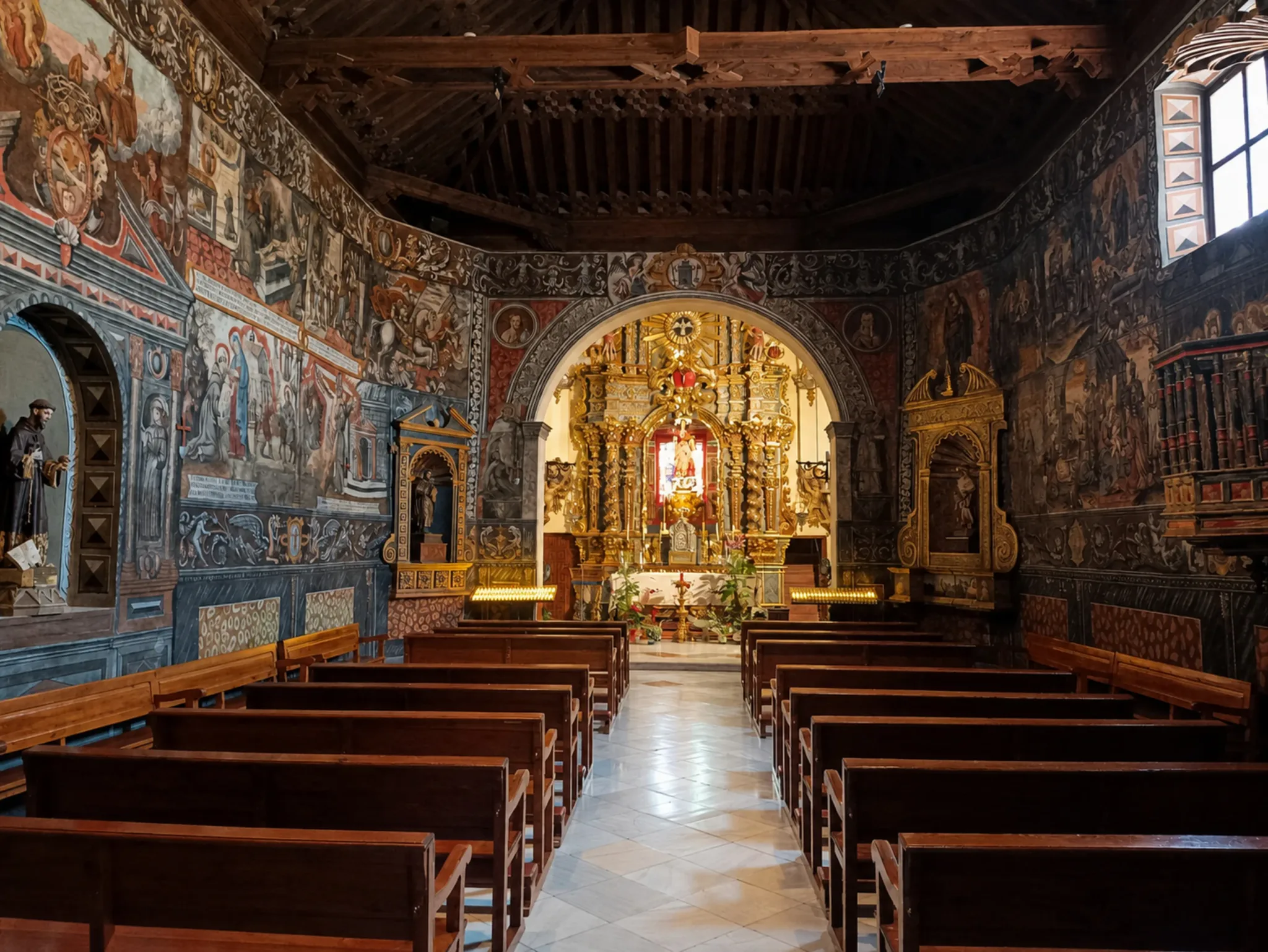
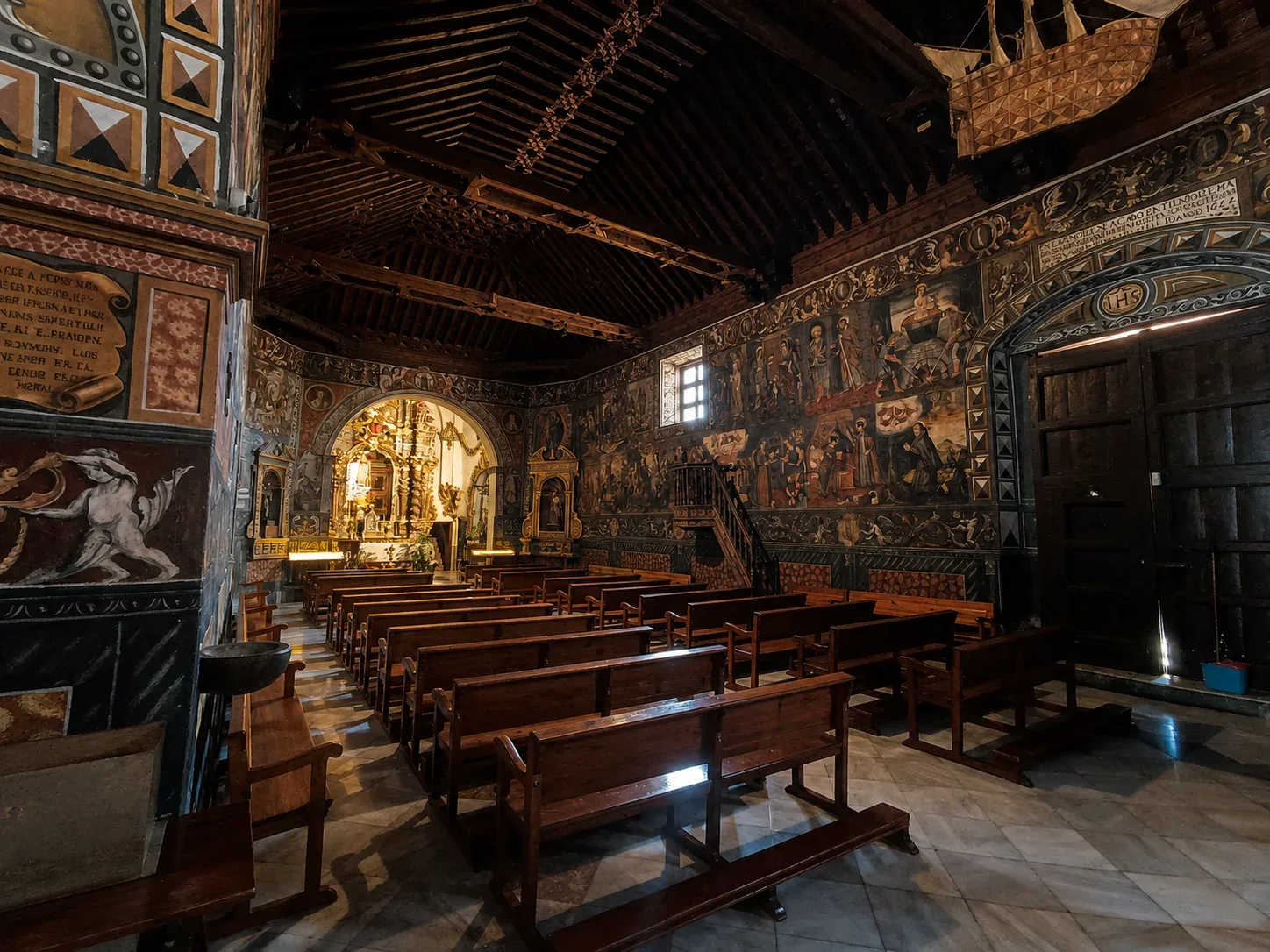
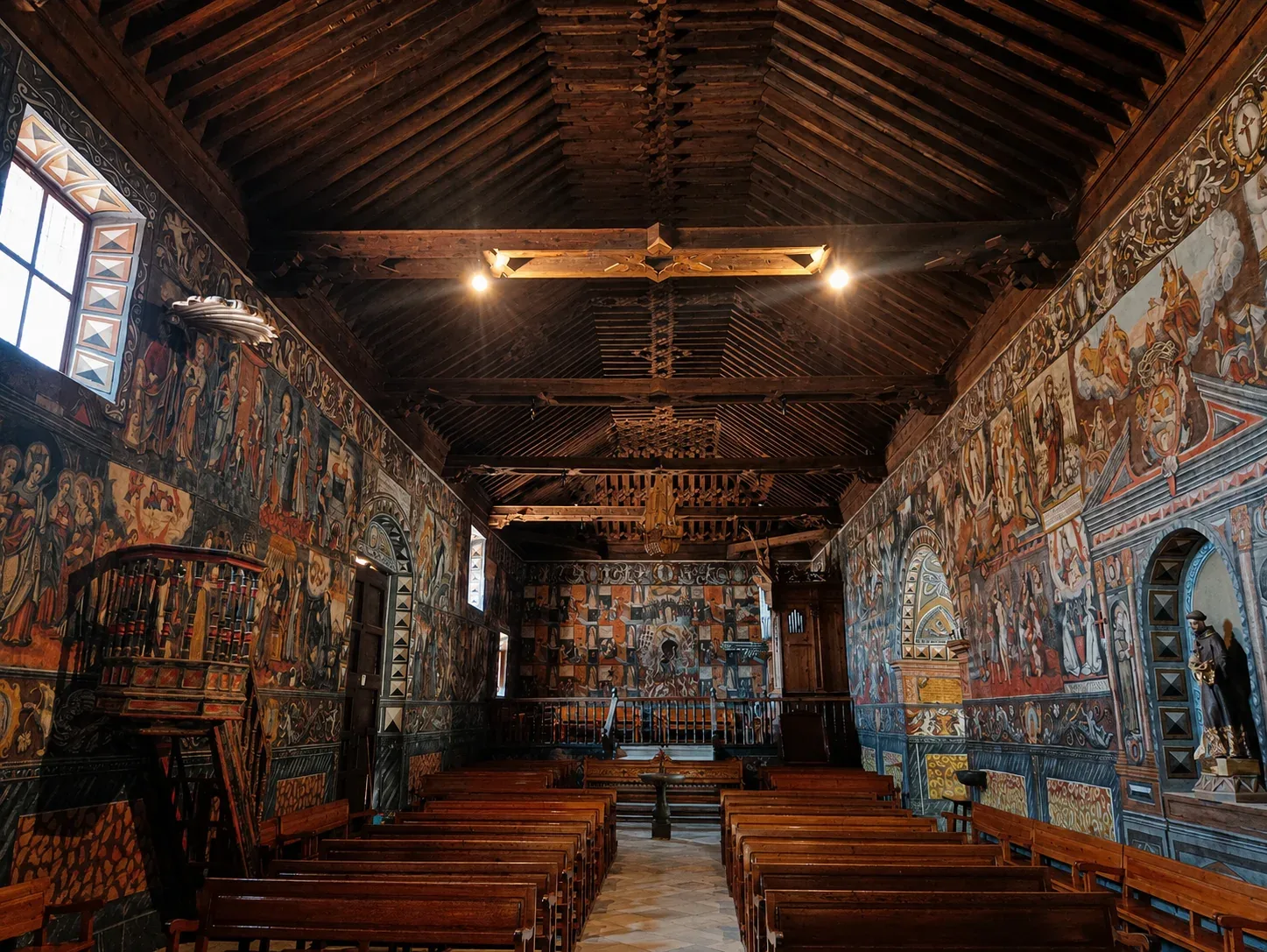
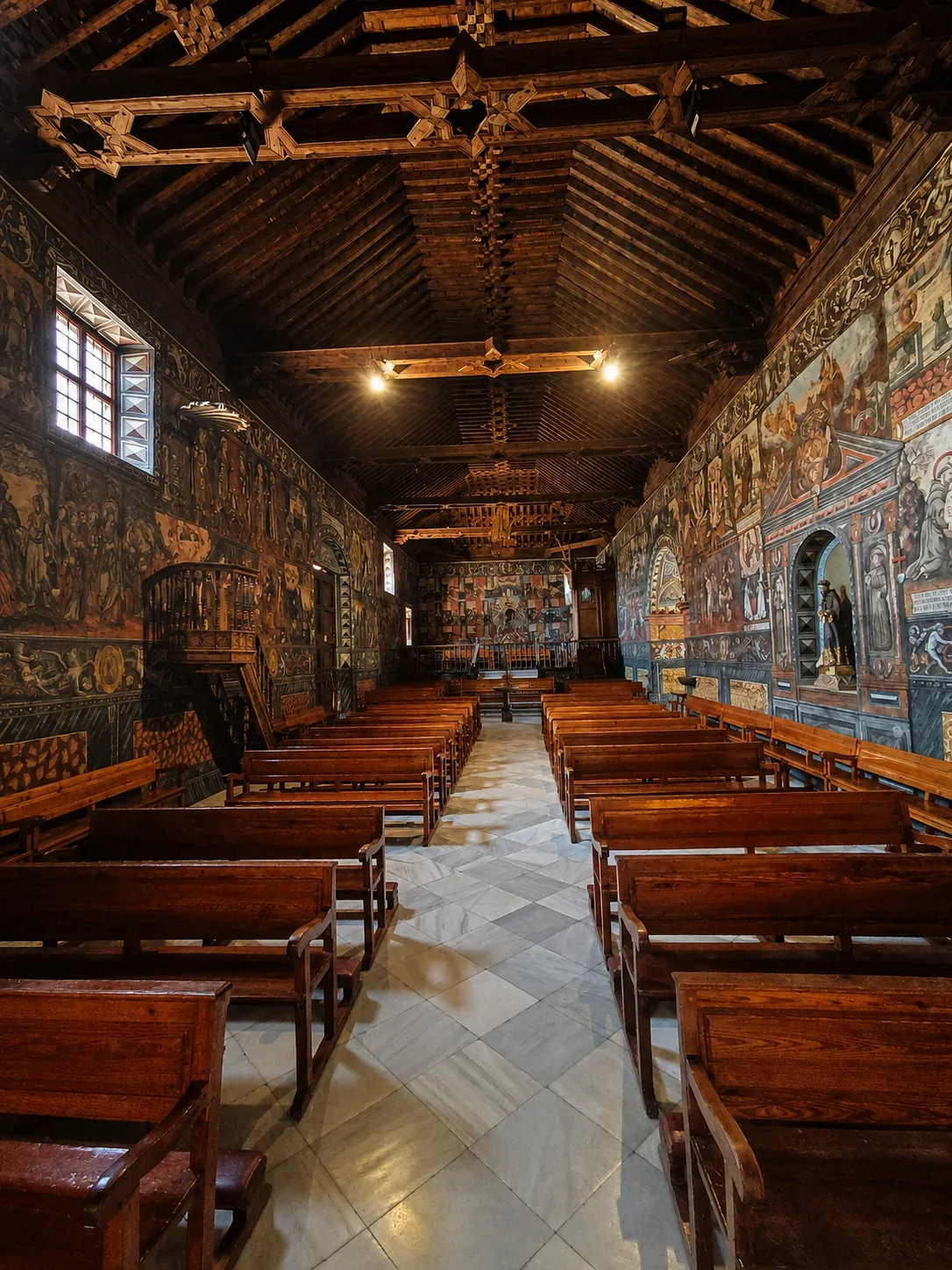
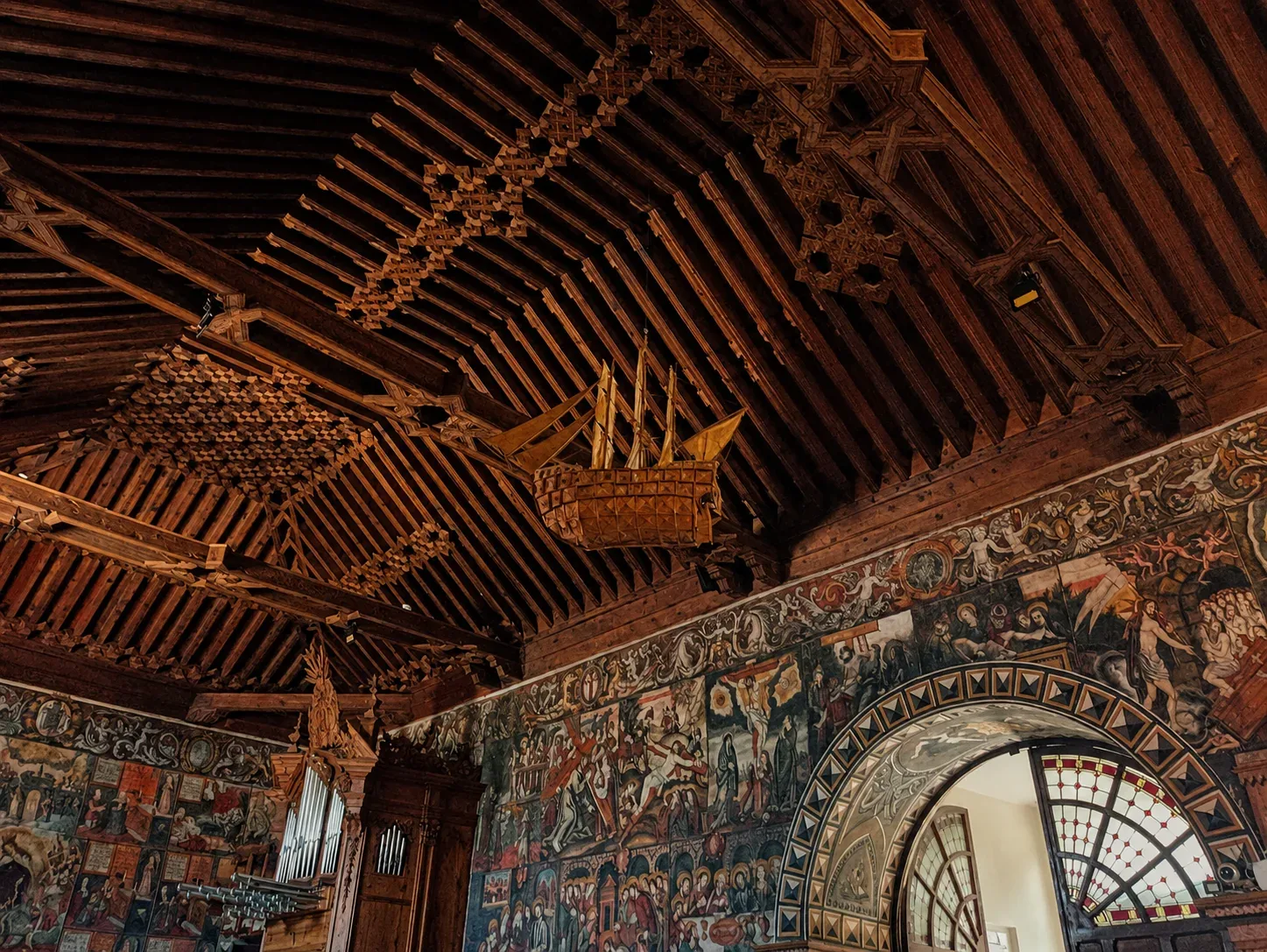
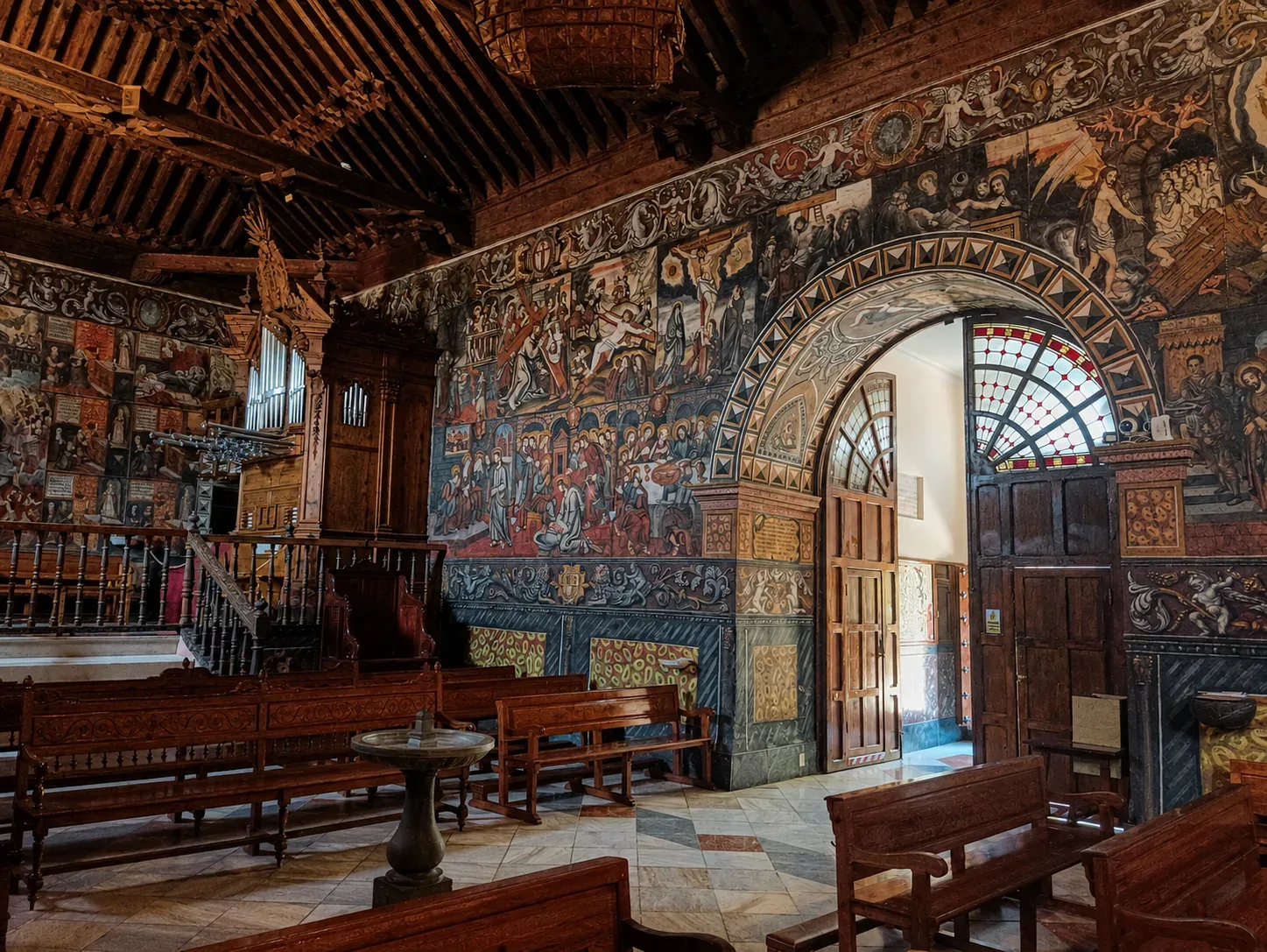
Inside, narrative tempera paintings cover the nave walls. Totana’s tourism service dates the main painted cycle to 1601-1624 and attributes it to Juan Ibáñez. The scenes depict religious subjects in dense bands of colour, turning almost every section of wall into part of the visual story.
Above them is an elaborate Mudéjar timber ceiling made by the workshop of Esteban Riberón. Its carved braces and geometric construction are best appreciated by walking slowly through the nave and looking back from several angles.
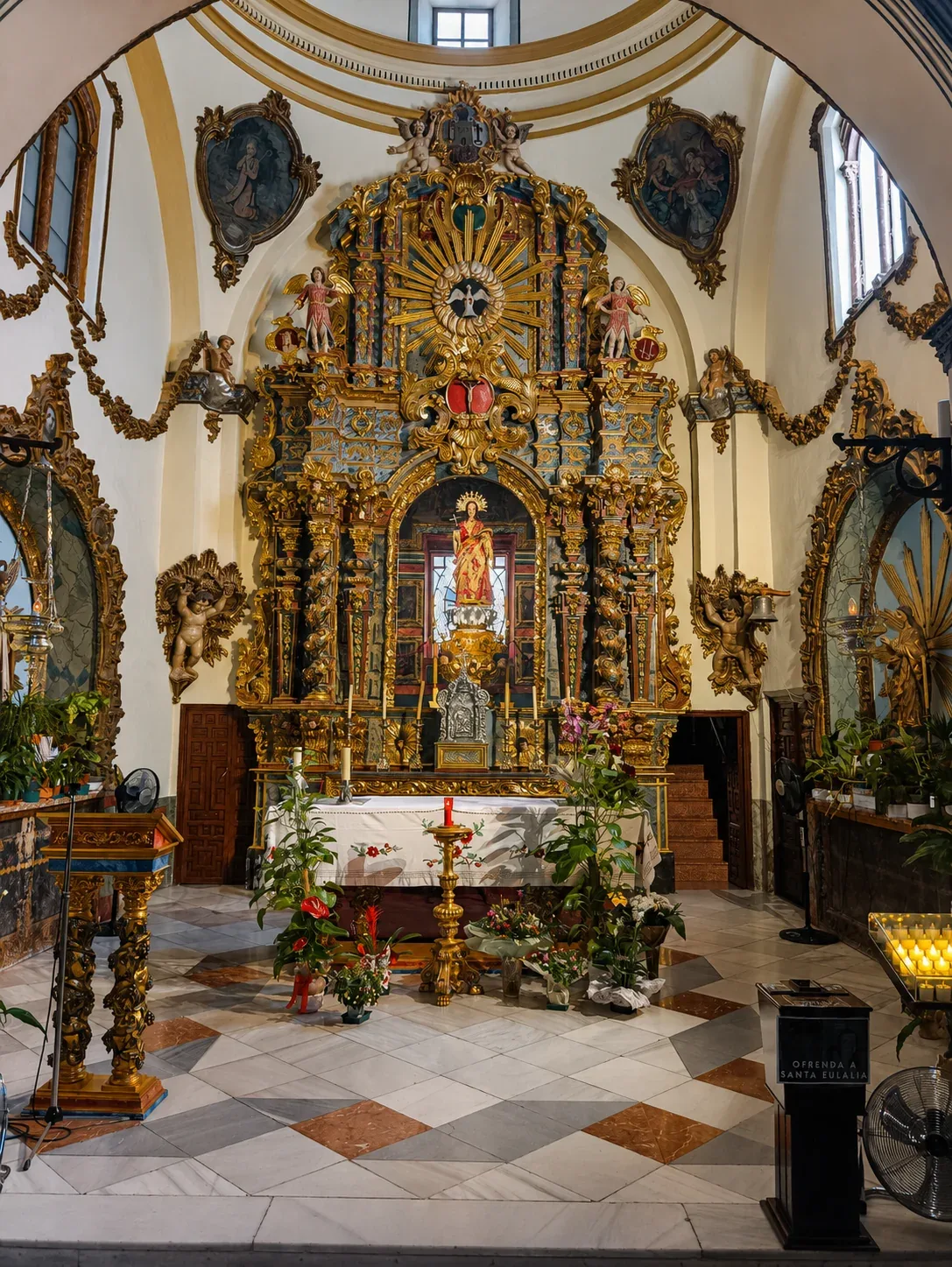
The presbytery and octagonal camarín behind the main altar were added later in the 18th century. Their Baroque decoration creates a brighter, more ornate focal point beyond the darker timber and painted walls of the nave.
Extend the visit around La Santa
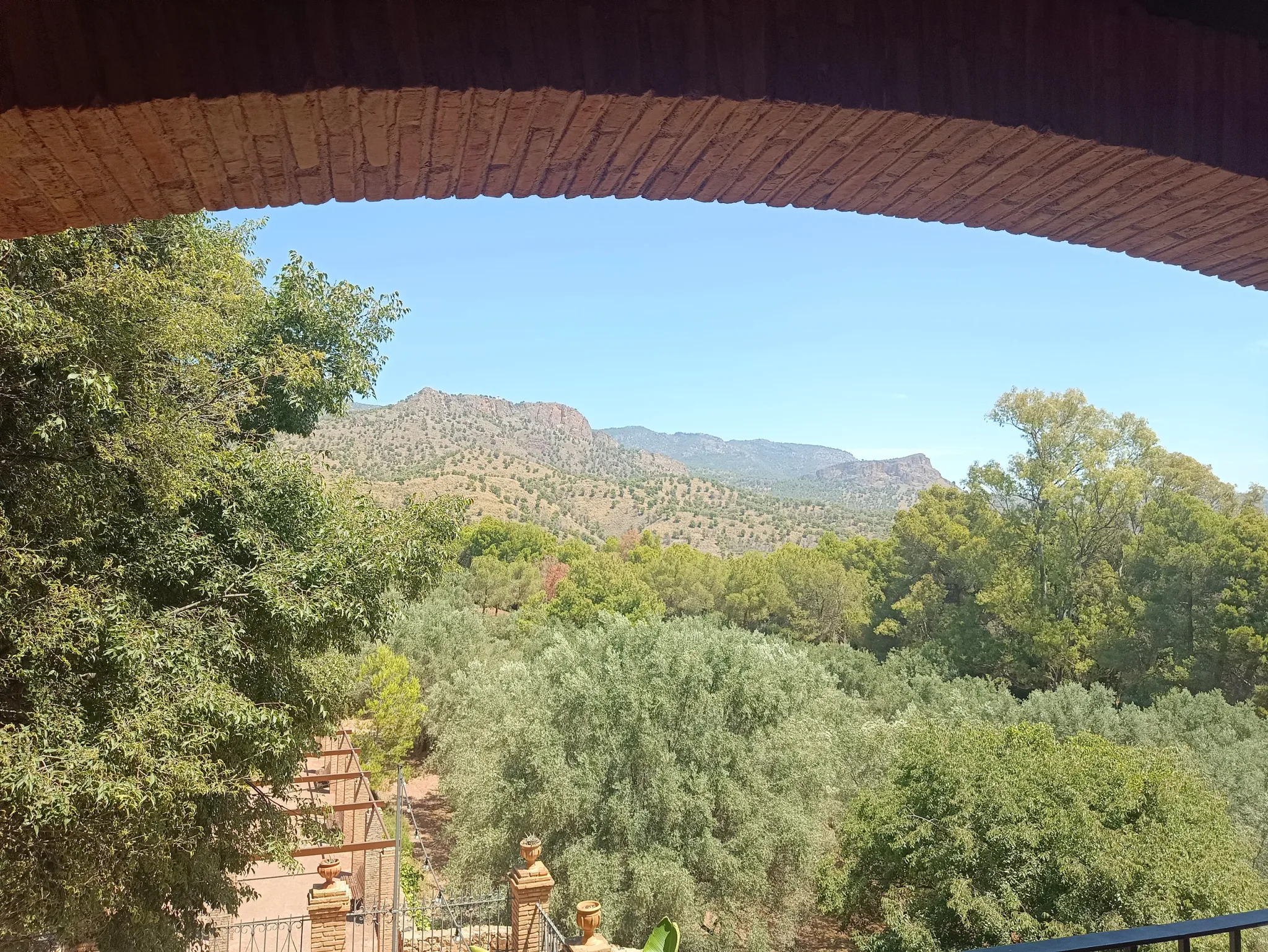
The sanctuary is part of a wider mountain complex rather than an isolated indoor sight. A short route leads towards the Virgen Blanca viewpoint, while other signed paths explore the surrounding landscape or continue to Aledo. The complex also has a bar/café and a restaurant, while nearby recreational areas make it easy to combine the interior with a longer stop outdoors.
Check the current visitor hours before travelling, particularly around the published winter closure and religious celebrations. The sanctuary remains an active place of worship, so enter quietly and allow services to take priority.