Getting around Murcia is not difficult, but the right transport choice changes the trip. Murcia City and Cartagena are easy to enjoy on foot once you are in the centre. For a stay of several days to a week that includes beaches, nature parks, wine towns or smaller inland destinations, car hire is strongly recommended.
Quick answer: do you need a car in Murcia?

You do not need a car for a simple Murcia City break, and you may not need one for a Cartagena-focused stay. You should strongly consider hiring a car if you want to visit several beaches, Calblanque, Sierra Espuna, Bolnuevo, Lorca, Caravaca, wine towns or smaller inland municipalities in one trip.
Murcia City: easiest on foot
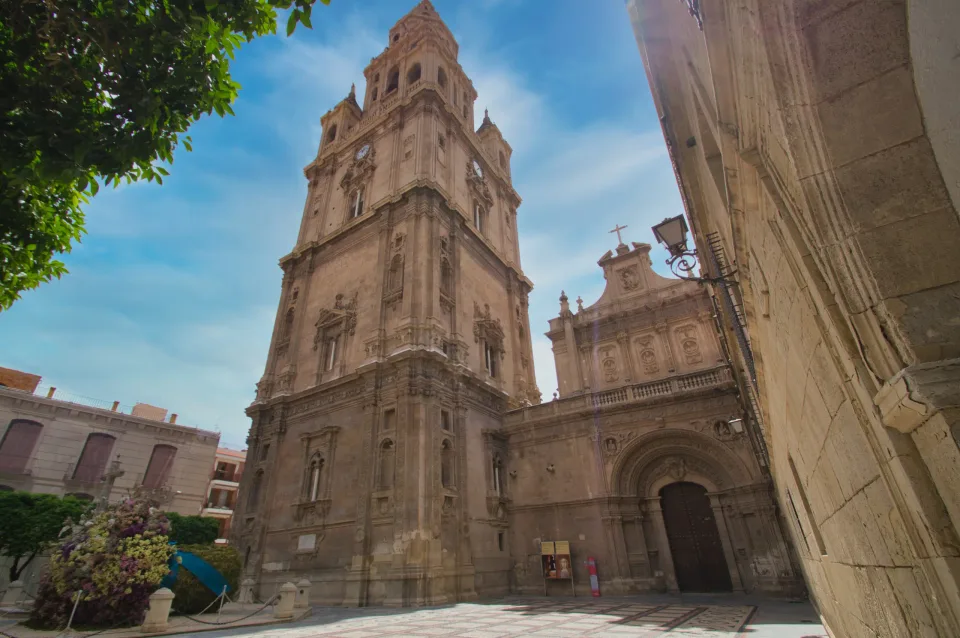
Murcia City is compact enough that most first-time visitors can explore the centre on foot. Plaza Cardenal Belluga, Murcia Cathedral, the Real Casino, Traperia, Plateria, Plaza de las Flores, the Segura river and Floridablanca Garden all fit naturally into a walking day.
For this kind of trip, a car can be more of a burden than a benefit. Parking, one-way streets and city-centre driving add friction when the main sights are already close together.
Cartagena: walk once you arrive
Cartagena is also very walkable in the centre. The Roman Theatre, harbour, historic streets, museums and viewpoints can be combined without needing to drive between sights. The transport decision is mainly about how you get to Cartagena, not how you move around once you are there.
If Cartagena is part of a wider coastal route, a car makes sense. If it is a simple day trip between cities, public transport may be enough if current schedules work for your dates.
Trains: useful for main city links
Train travel can be useful for larger urban connections, especially when you want to avoid driving into city centres. The limitation is that train travel does not solve the whole Murcia region. It is less useful for beaches outside main corridors, natural parks, rural villages or multi-stop days.
Always check current schedules with the operator before planning a tight itinerary. Avoid relying on assumed train times from old guides or forum posts.
Buses: practical, but plan carefully
Buses can connect towns and coastal areas, but they require more planning than driving. They are best for straightforward point-to-point journeys where you have checked the timetable in advance. They are less ideal if you want to visit several small places in one day or move between beaches and nature areas.
For visitors without a car, it is better to choose a base carefully and plan fewer, stronger excursions rather than trying to imitate a driving itinerary by bus.
Car hire: best for beaches, parks and inland towns
Car hire gives the most freedom in Murcia. It makes it easier to visit Puerto de Mazarron, Bolnuevo, Calblanque, Aguilas, Sierra Espuna, Lorca, Caravaca, Jumilla, Bullas, Yecla and smaller villages. It also helps if you want to adjust plans around weather, heat or family energy levels.
On a recent Total Travel Guide day out, we linked Lorca, Totana and Aledo by car. Visiting all three in one day is not realistically practical for a visitor using public transport. That is the clearest reason to hire: the car gives you access to a version of Murcia that fixed timetables cannot easily provide.
The trade-off is that historic centres can be awkward for parking. A good rule is to park near the edge of the old centre and walk in. This is especially sensible in castle towns and busy city centres.
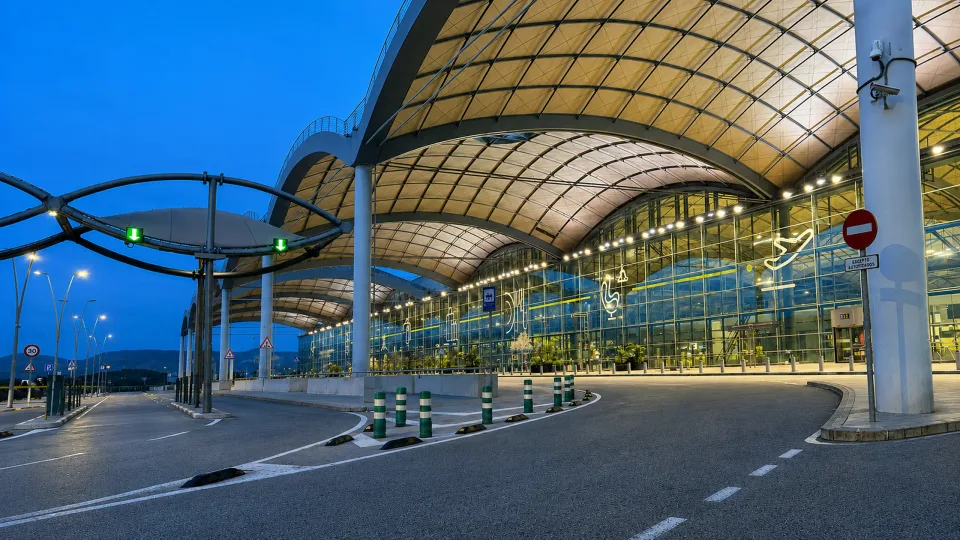
If you are collecting the car after a flight, compare car hire at Murcia Airport with car hire at Alicante Airport. Check the total price, deposit, insurance excess, fuel policy, collection point and return instructions rather than choosing only by the advertised daily rate.
Airport transfer planning
Think about your first and last days. Unless the whole stay is centred on walkable Murcia or Cartagena, collecting the car at the airport is usually the simplest way to begin a regional trip. Check late-arrival and early-return arrangements before paying.
The airport with the cheapest flight is not always the best overall choice. Our comparison of Murcia Airport and Alicante Airport explains which arrival point tends to suit different parts of the region and what to include in the door-to-door cost.
Best transport by itinerary
- Murcia City weekend: walk, with taxis or public transport where useful.
- Cartagena day trip: train, bus or car depending on your base.
- Beach holiday: car if you want variety beyond one resort.
- Nature trip: car strongly recommended.
- Wine route: plan transport carefully and do not rely on improvising.
- One-week itinerary: car gives the best flexibility.
Parking and summer traffic
In summer, popular beach areas can be busier and parking can take longer. Plan beach days with a little slack rather than assuming every transfer will be quick. In historic centres, use signed parking areas and walk the final stretch.
For a practical route using these transport choices, see One Week in Murcia: A Balanced 7-Day Itinerary.