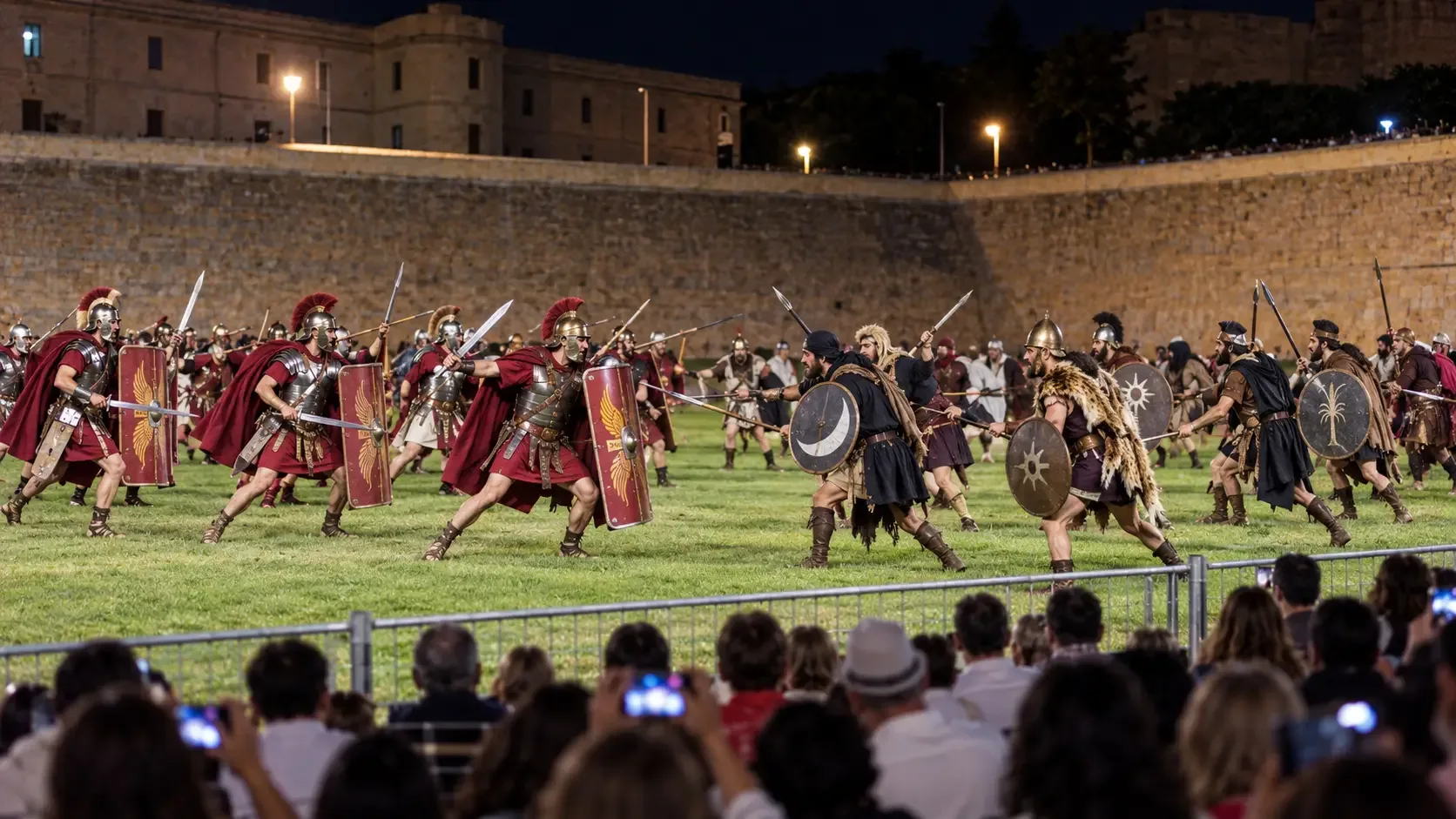
Every September, Cartagena swaps everyday life for armour, standards and ancient rivalries as thousands of local people take part in the Carthaginians and Romans Festival — known locally as Fiestas de Carthagineses y Romanos.
The festival returns from Friday 18 to Sunday 27 September 2026 for its 37th edition. Across ten days, the city will recreate episodes from the Second Punic War with theatrical performances, land and sea battles, processions, music and an enormous parade through the centre of Cartagena.
This is far more than a historical show watched from behind a barrier. Carthaginian troops and Roman legions fill the streets, the harbour becomes part of the stage, and the large festival camp beside the Cartagonova stadium keeps the atmosphere going late into the night.
Whether you visit for a single afternoon or make a weekend of it, this is one of the most colourful and memorable times of year to experience Cartagena.
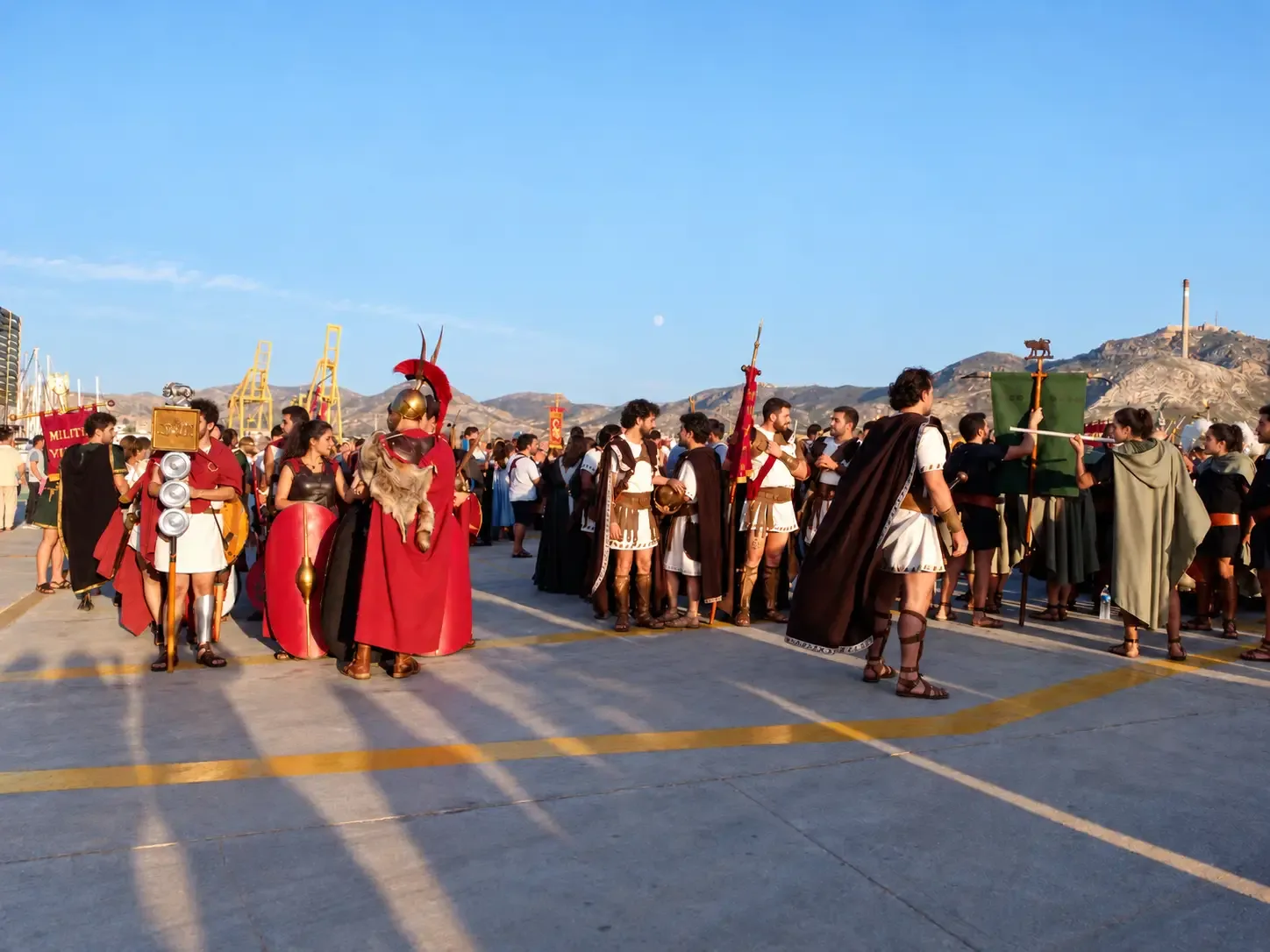
Carthaginians and Romans Festival 2026 dates
The main 2026 festival takes place from 18–27 September.
The opening ceremony and proclamation are held on Friday 18 September, followed by nine more days of historical performances and celebrations. The final night, Sunday 27 September, brings the extinguishing of the Sacred Fire and a firework display at the festival camp.
The 2026 edition has the theme “Raíces de Guerra”, or “Roots of War”, and is officially recognised as a Festival of International Tourist Interest.
What is the festival about?
The celebrations are inspired by events that took place more than 2,200 years ago, when Cartagena stood at the centre of the struggle between Carthage and Rome.
The story begins with the foundation of Qart Hadast by the Carthaginian general Hasdrubal in 227 BC. The city later became an important base for Hannibal before being captured by the Roman general Publius Cornelius Scipio in 209 BC. Under Roman rule, it became known as Carthago Nova.
Rather than trying to tell the entire story in one performance, the festival unfolds across ten days. Each major event represents another chapter: the foundation of the Carthaginian city, the destruction of Saguntum, the marriage of Hannibal and Himilce, preparations for war, the arrival of the Roman fleet and, finally, the Roman conquest of Qart Hadast.
The setting makes it particularly effective. Performances take place around the harbour, historic centre and hills of a city where Punic and Roman remains can still be visited today.

The best events to see in 2026
There are activities throughout the festival, but the following are the main events to build a visit around. Use Add to calendar below to download a reminder for your calendar app. Reminders mark the advertised start time; finishing times are not confirmed.
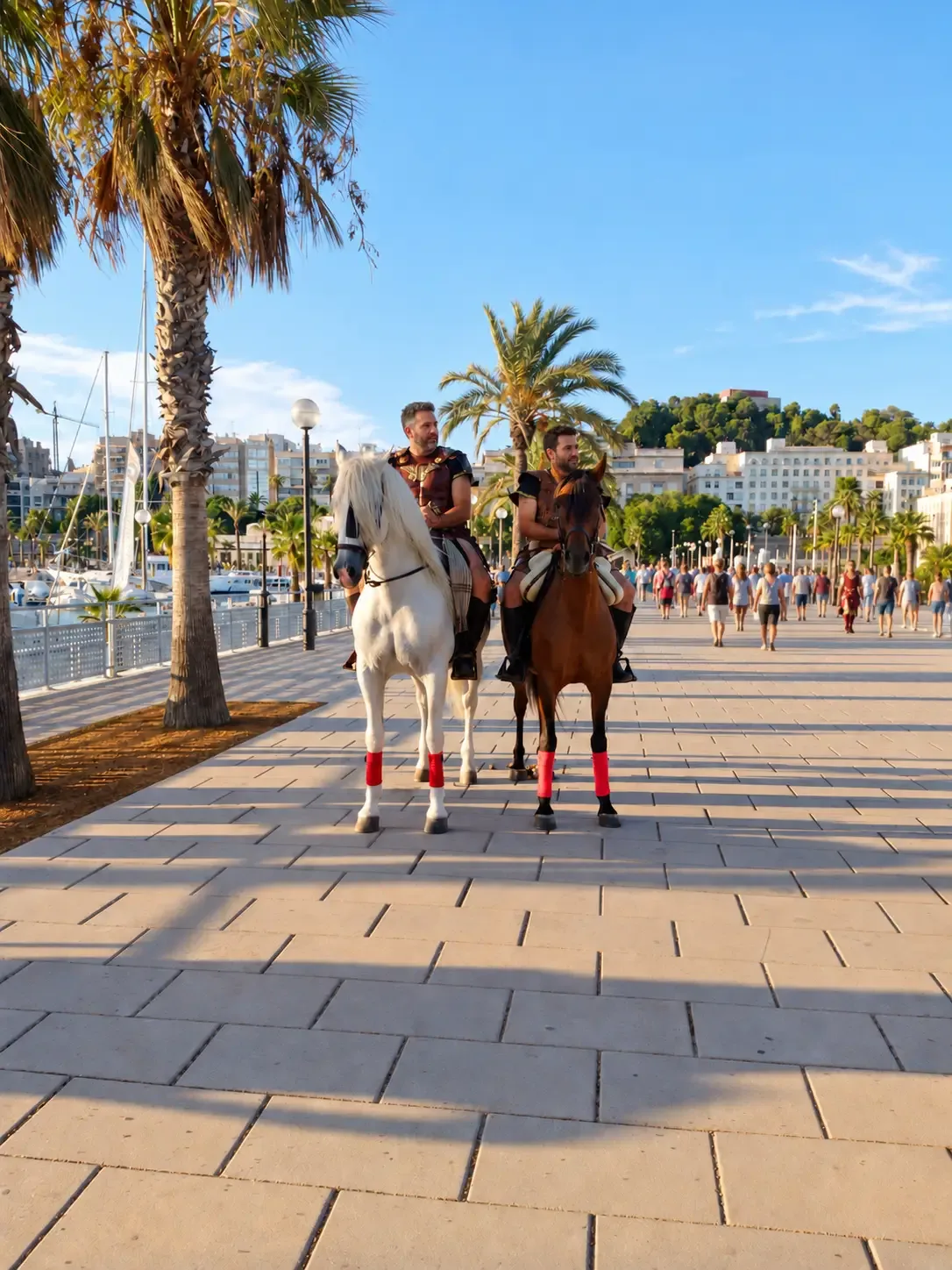
Opening night and the Sacred Fire — Friday 18 September
Add to calendar
The festival begins with the lighting of the Sacred Fire at 20:20 on the Molinete, followed by the official proclamation at the Palacio Consistorial in Plaza del Ayuntamiento at 21:30. This year’s proclamation will be delivered by Spanish rapper, actor and writer El Langui.
Afterwards, Carthaginian troops and Roman legions process through the centre to the festival camp, which officially opens at approximately 23:30.
Opening night is a good introduction to the festival, with the historic centre gradually filling with costumes, music and marching groups as the celebrations get underway.
Foundation of Qart Hadast and Carthaginian parade — Saturday 19 September
Add to calendar
The first Saturday belongs to the Carthaginians. At 20:15, the Foundation of Qart Hadast recreates the establishment of the city in a performance at Plaza Mayor on the port esplanade.
It is followed by the raising of the Carthaginian flag at the Palacio Consistorial and the Gran Desfile Carthaginés, when the Carthaginian groups march from the centre towards the festival camp.
The Senate and the road to war — Sunday 20 September
Add to calendar
The Romans take centre stage on Sunday evening. The Roman Senate meets at Plaza Mayor at 19:45, followed at 21:00 by Sagunto: El Juramento de Roma, which sets the conflict between Rome and Carthage in motion.
The Senate performance traditionally mixes history with humour and references to more recent local events, giving it a rather different tone from the larger battle scenes.
The wedding of Hannibal and Himilce — Monday 21 September
Add to calendar
One of the festival’s best-known performances is the wedding of Hannibal and Himilce, held at Plaza Mayor at 21:00.
The ceremony represents the marriage between the Carthaginian general and the Iberian princess, followed by a procession to the camp and Carthaginian wedding celebrations. Visitors can even take part in playful wedding ceremonies performed according to the different traditions of the Carthaginian groups.
Gran Circo Máximo — Wednesday 23 September
Add to calendar
The Gran Circo Máximo returns to the Estadio Cartagonova in 2026, beginning at 21:00. The show is expected to include gladiatorial combat, acrobatics, dance and scenes inspired by Roman mythology.
This is a ticketed event and is likely to be popular, particularly because the Roman circus has not been held at the stadium for many years. Advance booking is advisable.
Earlier that evening, the period market opens at Parque Alberto Vallejo Alberola at 19:00 and remains available until Sunday.
Carthaginian landing and Hannibal’s departure — Thursday 24 September
Add to calendar
Thursday offers a full day of family and historical events. A children’s parade begins at 11:00, followed by a children’s battle and games at 12:30.
In the evening, the Carthaginian fleet lands at the cruise terminal at 19:15. The Hiring of Mercenaries follows at Plaza Mayor at 20:15, before Hannibal and his army depart symbolically for Rome at 21:30.
This is one of the best days for seeing the harbour used as part of the festival story.
Roman landing and the Battle for Qart Hadast — Friday 25 September
Add to calendar
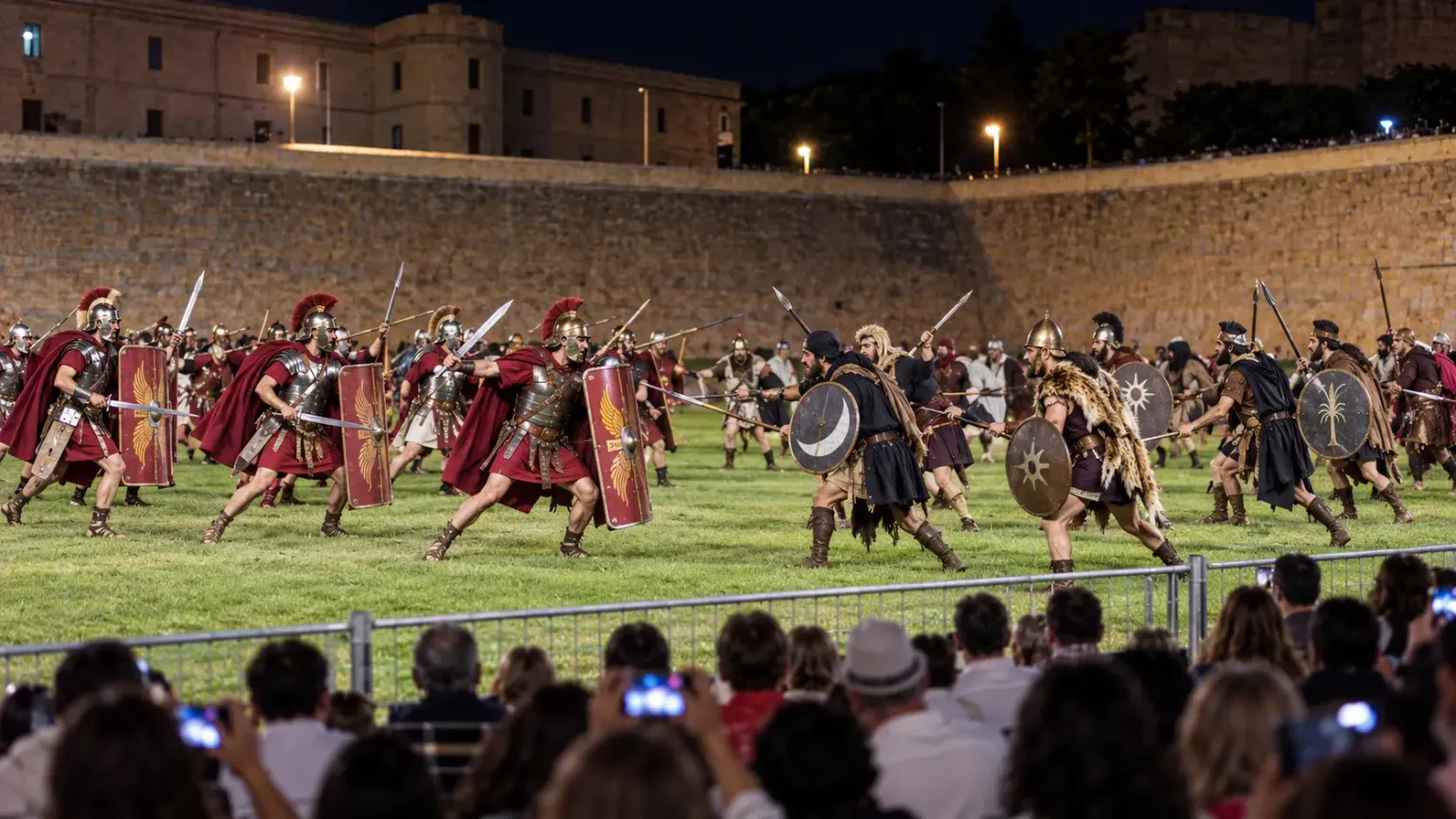
Friday 25 September is the festival’s great day of conflict and arguably the strongest choice if you can visit only once.
The day begins with the light-hearted maritime battle in Cartagena Bay at 10:45. The Roman forces then land at Plaza Mayor at 17:00, before the main Battle for the Conquest of Qart Hadast begins on the Cuesta del Batel at 18:30.
The battle is a ticketed event, with troops, weapons and theatrical effects recreating the Roman assault on the Carthaginian city. Following the conquest, the Roman victory is declared outside the Palacio Consistorial and the victorious legions parade to the festival camp at 21:00.
Grand Parade of Troops and Legions — Saturday 26 September
Add to calendar
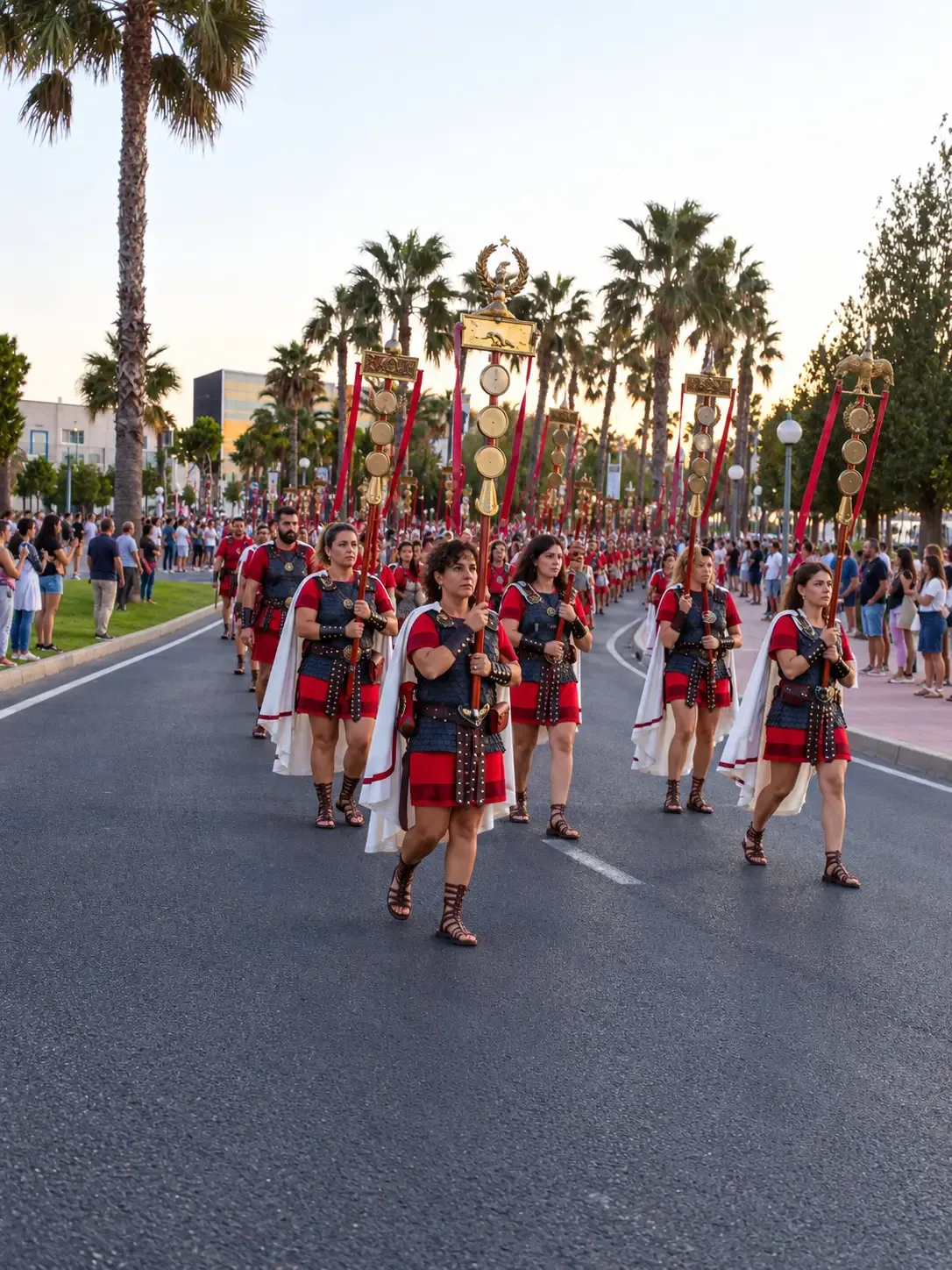
If your priority is costumes, spectacle and photography, plan your visit for the second Saturday.
The Gran Desfile General de Tropas y Legiones begins at 18:30. Every Carthaginian troop and Roman legion dresses in its finest ceremonial costume for the largest parade of the festival.
The route starts outside the Palacio Consistorial and passes through Calle Mayor, Puertas de Murcia, Calle del Carmen and Plaza de España before continuing towards the Cartagonova stadium and festival camp.
Expect the centre to be extremely busy and find your position well before the advertised start time.
Closing ceremony and fireworks — Sunday 27 September
Add to calendar
The ten-day celebration ends at the festival camp. The Sacred Fire is extinguished at 21:30, formally closing the festival, followed by a large firework display at 22:00.
Visiting the festival camp
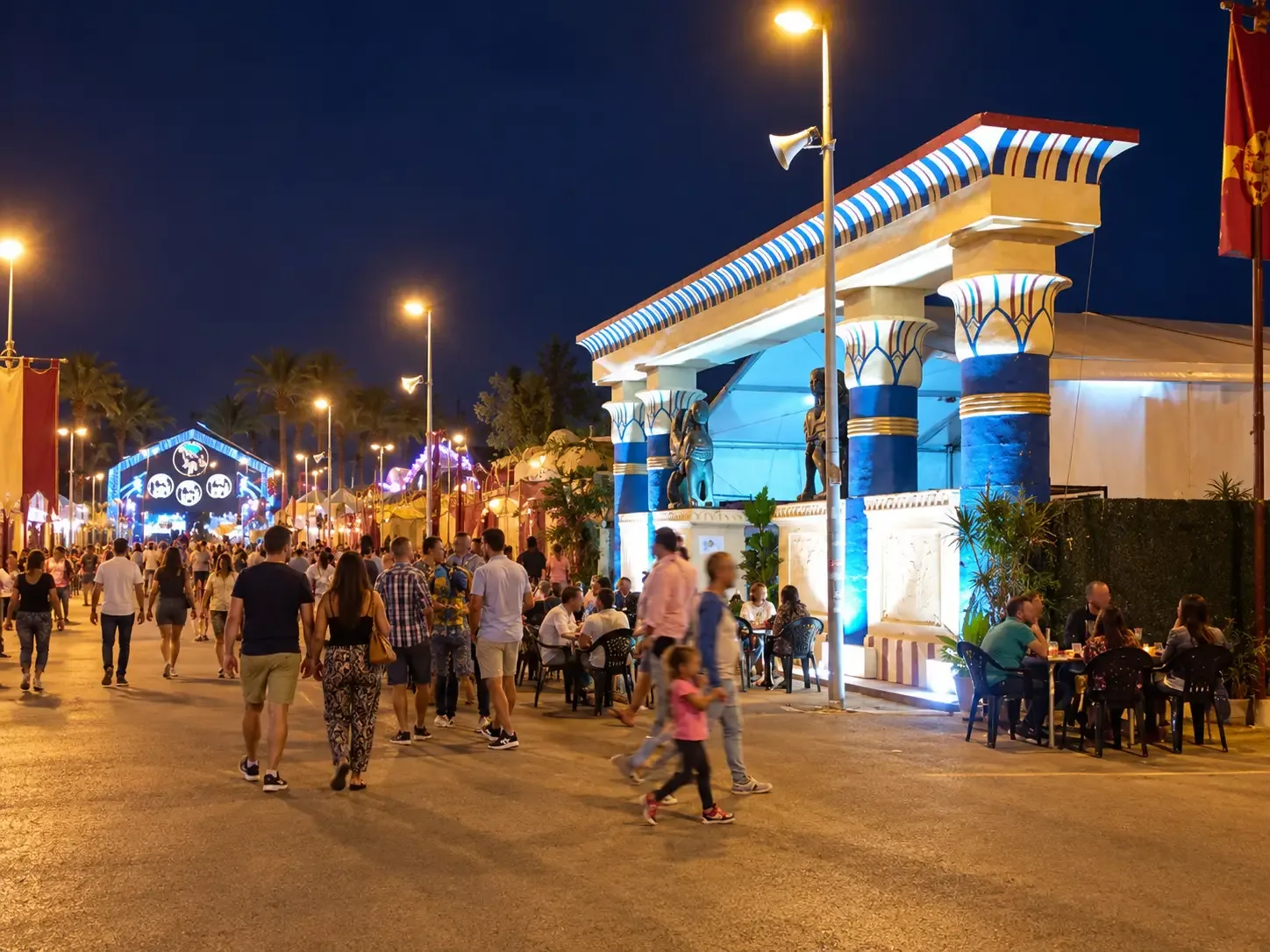
The Campamento Festero is a major part of the experience rather than simply somewhere the participants gather after the performances.
Built beside the Estadio Cartagonova, it is divided into streets occupied by the different Carthaginian troops and Roman legions. Many groups have elaborately decorated bases, while bars, food, music and entertainment create a lively atmosphere that continues well into the evening.
The camp is at its busiest after the main performances and parades arrive from the city centre. Visit earlier if you want to look around at a gentler pace; return later if you want to experience the celebrations at their liveliest.
Which day should you choose?
If you cannot attend the entire festival, choose according to what you most want to see:
- For the main battle: Friday 25 September
- For the biggest parade and best range of costumes: Saturday 26 September
- For Carthaginian events and a large parade: Saturday 19 September
- For families with younger children: Thursday 24 September
- For ceremony and atmosphere: opening night on Friday 18 September
- For a quieter midweek visit: Monday 21 or Tuesday 22 September
A weekend visit covering Friday 25 and Saturday 26 September gives you the Roman landing, conquest of Qart Hadast, victory procession and the Grand Parade — but it will also be the busiest part of the festival.
Practical tips for your visit
- Arrive early. The main streets, Plaza Mayor and the Cuesta del Batel can become crowded well before the headline events begin.
- Check which events need tickets. The Gran Circo Máximo and Battle for Qart Hadast are specifically listed as ticketed in the official programme. The separate Estrella de Levante music concerts on 25 and 26 September also require tickets.
- Wear comfortable shoes. The historic centre, harbour and festival camp are spread across a fairly large area, and you are likely to do plenty of walking.
- Do not rely on driving into the centre. Road closures, crowds and the festival camp make central parking more difficult than usual. Allow extra time and consider parking outside the busiest streets.
- Stay into the evening. Many of the most atmospheric events begin after sunset, and the camp becomes livelier after the day’s processions finish.
- Keep checking the programme. Times are described by the organisers as approximate and may change for organisational, technical or weather-related reasons.
Make a day of Cartagena’s ancient history
The festival is even more rewarding when paired with Cartagena’s surviving archaeological sites.
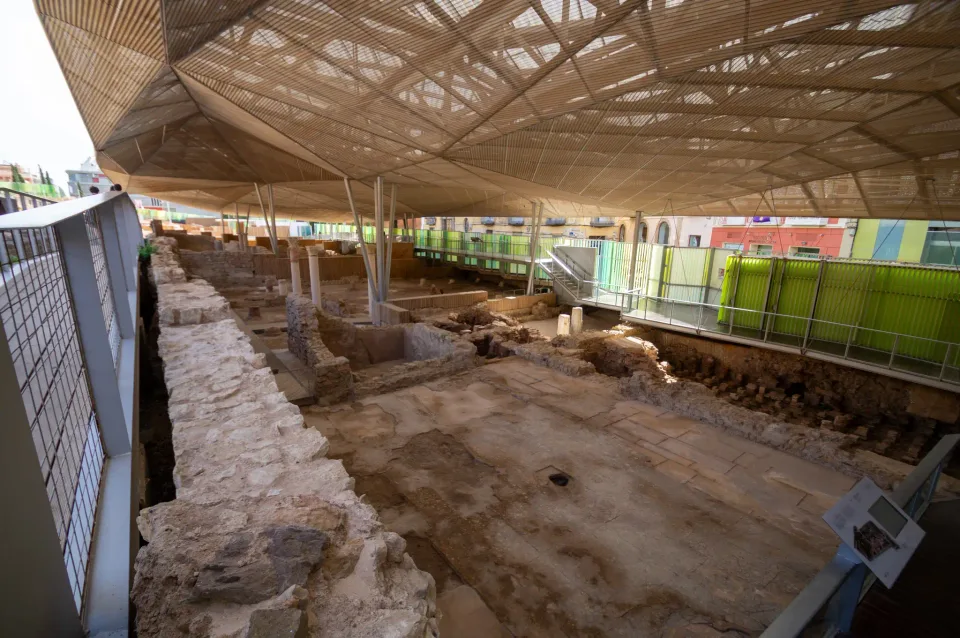
The Roman Theatre is the obvious starting point, but the Punic Wall is particularly relevant to the story of the Carthaginian city and its capture by Rome. The Roman Forum District on the Molinete and the Augusteum reveal more of the city that developed during the Roman period.
Visit one or two sites during the day, then watch the same history spill out into the streets after dark.
Is the Carthaginians and Romans Festival worth visiting?
Absolutely. Few festivals make such effective use of their surroundings, and Cartagena’s harbour, archaeological remains and historic streets give the performances a sense of place that would be difficult to reproduce elsewhere.
It can be loud, crowded and exuberant — particularly during the final weekend — but that is part of its appeal. This is not a small historical display. It is a city-wide celebration created by thousands of participants who spend much of the year preparing their costumes, camps and performances.
For visitors, it offers a rare chance to see Cartagena’s history not just inside its museums and monuments, but marching through its streets.
Useful information
Dates: 18–27 September 2026
Location: Cartagena, Region of Murcia
Main areas: Historic centre, Plaza Mayor and the port, Cuesta del Batel, Estadio Cartagonova and the Campamento Festero
Official programme: Carthaginians and Romans Festival 2026 programme
Programme checked: 7 September 2026. All times are local to Cartagena (Europe/Madrid).
Important: Event times may change. Check the official programme before travelling.