


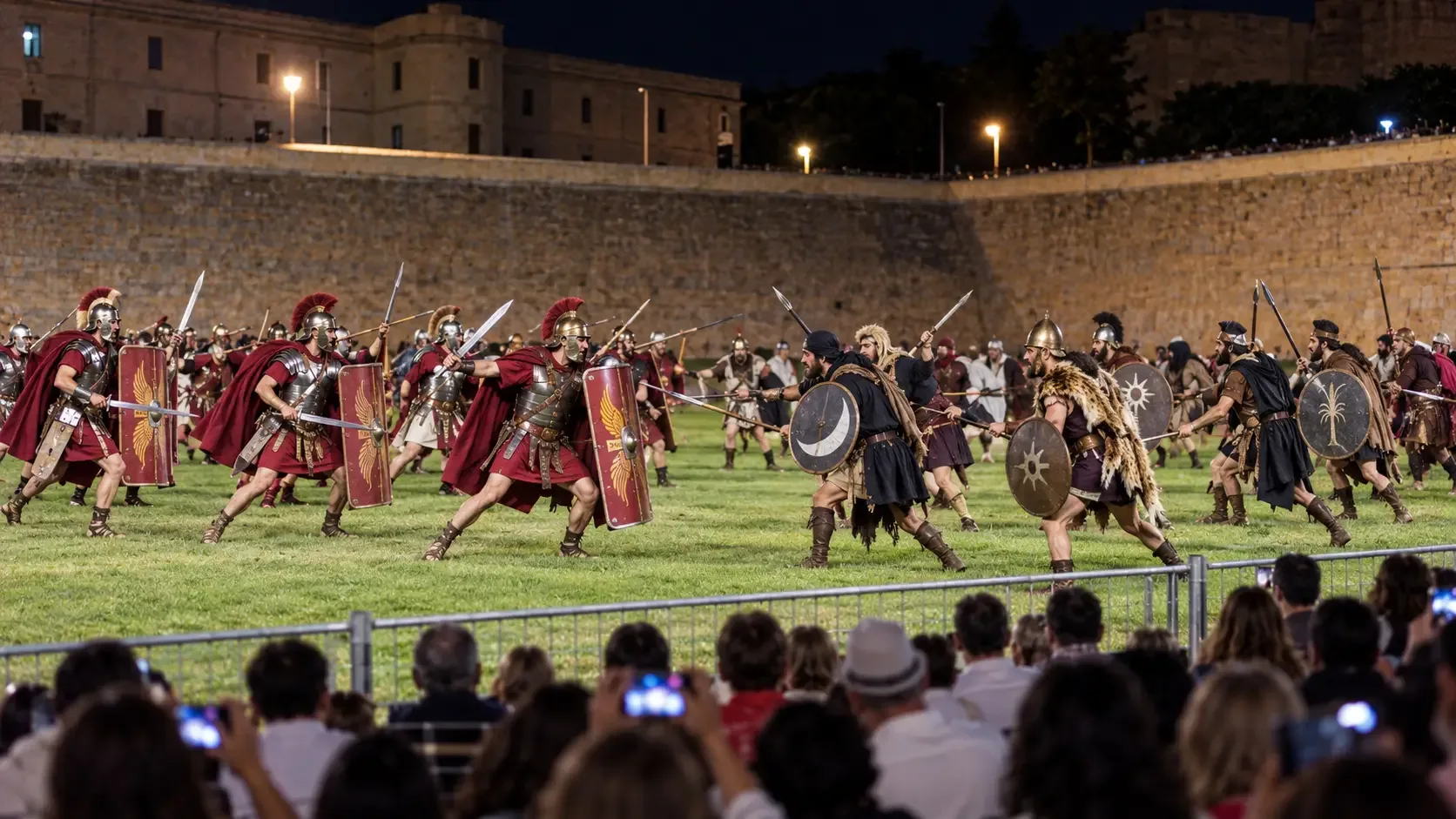
What can you expect to see?
The programme changes from year to year, but the festival is built around major moments from Cartagena’s Carthaginian and Roman past.
Recurring highlights can include the founding of Qart Hadasht, the Roman Senate, the wedding of Hannibal and Himilce, Hannibal’s campaign against Rome, dramatic landings at Cartagena’s port, historical battles and large parades involving Carthaginian troops and Roman legions.
Many of the performances use Cartagena itself as the backdrop, so the festival works particularly well in a city where Roman, Punic and later archaeological remains are already part of the visitor experience.
Even away from the main scheduled events, it is common during festival week to encounter costumed groups, musicians and participants moving through the historic centre.
The festival camp
One of the things that makes Carthaginians & Romans different from a conventional historical reenactment is the festival camp.
The Carthaginian troops and Roman legions create their own encampments, and the festival area becomes an important part of the celebrations, particularly in the evenings.
Visitors can explore the camp, see the different groups and costumes, find food and drink and enjoy many smaller activities alongside the headline events.
The atmosphere becomes increasingly lively later in the day, so the camp offers a very different experience from visiting Cartagena’s archaeological sites in normal daytime conditions.
Where does it happen?
There is no single festival venue.
Events take place across Cartagena, including the historic centre, port area and other locations chosen for individual reenactments and ceremonies.
The main festival camp provides a central focus during the celebrations, but some of the most memorable events make use of Cartagena’s streets, historic settings and waterfront.
Because locations and timings can change between editions, check the current programme before setting out for a particular event.
Is it worth visiting?
If you enjoy history, Cartagena is already one of the strongest destinations in the Region of Murcia. Visiting during Carthaginians & Romans adds another layer to that history.
Large set-piece events are the obvious attraction, but part of the fun is simply being in Cartagena while the festival is taking place. Costumed troops and legions appear around the city, restaurants and streets become part of the celebration and unexpected performances can happen away from the formal programme.
On one of our own visits, a group of festival participants arrived outside the restaurant where we were having lunch, performed music and delivered an impromptu speech before moving on through the city. Moments like this are part of what makes festival week feel different from an ordinary visit to Cartagena.
Planning your visit
If you are travelling specifically for Carthaginians & Romans, choose the events you most want to see before deciding which day to visit. Some days concentrate on theatrical reenactments, while others include major parades, battles or ceremonies.
Allow extra time for crowds, parking and getting around the historic centre, particularly for the largest events.
Comfortable footwear is useful because combining festival events with Cartagena’s museums, archaeological sites and waterfront can easily turn into a full day on foot.
September can also still be very warm in Cartagena, particularly during daytime events, so carry water and plan accordingly.
Exact events, locations and times change each year. Always use the current official programme and the latest Total Travel Guide annual festival guide when planning a visit.
Discover Cartagena
Carthaginians & Romans makes a great reason to visit Cartagena, but there is far more to explore while you are here.
The Roman Theatre and Punic Wall provide the clearest introduction to the two sides of the festival story. The Molinete Roman Forum Museum and Concepción Castle add further layers to the city’s history, while ARQVA explores Cartagena’s wider relationship with the Mediterranean.